
Planting Mangrove Trees in A Fishing Village
Planting Mangrove Trees in A Fishing Village: SFI Indonesia 2025
Written by Muhammad Amir S/O Shajehan, Lin Yu Xin & Loke Si Jin
As part of the Southeast Asia Friendship Initiative (SFI) course at the Residential College (RC4), we had the opportunity to join the Warloka village community on Flores Island, Indonesia, for a mangrove tree planting project. Warloka Village, home to about 200 families, is nestled in a cove that was once well protected by mangrove forests.
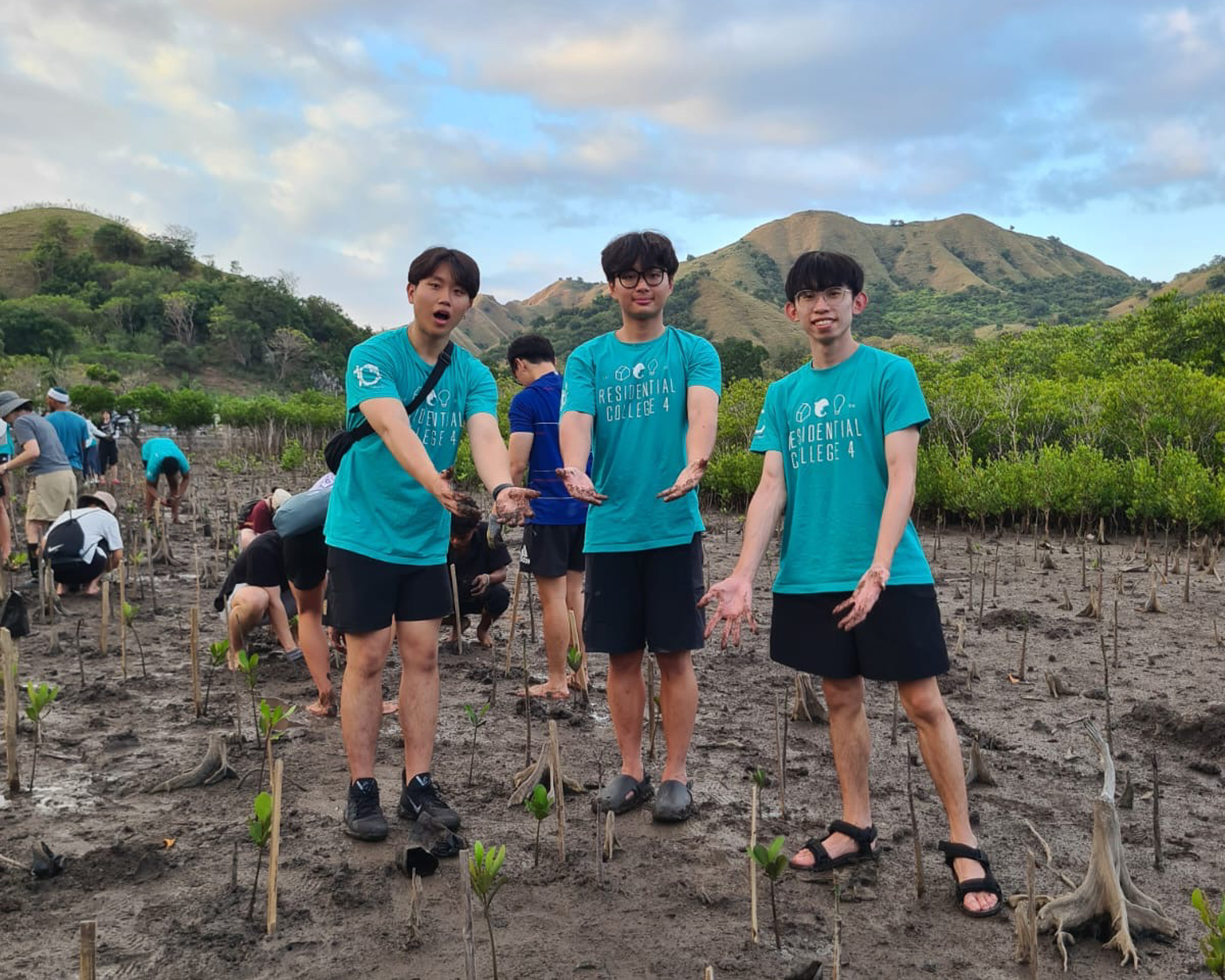
27 undergraduates from different faculties participated, and the mangrove project was a highlight on this trip to Flores Island. The community leaders shared with us that mangroves play an essential role in protecting coastlines and they provide habitats for marine species to spawn. In Warloka, the past clearing of mangroves had left the shore vulnerable to storms. Replanting efforts helps to restore the coastline and ensures the long-term wellbeing of the village.
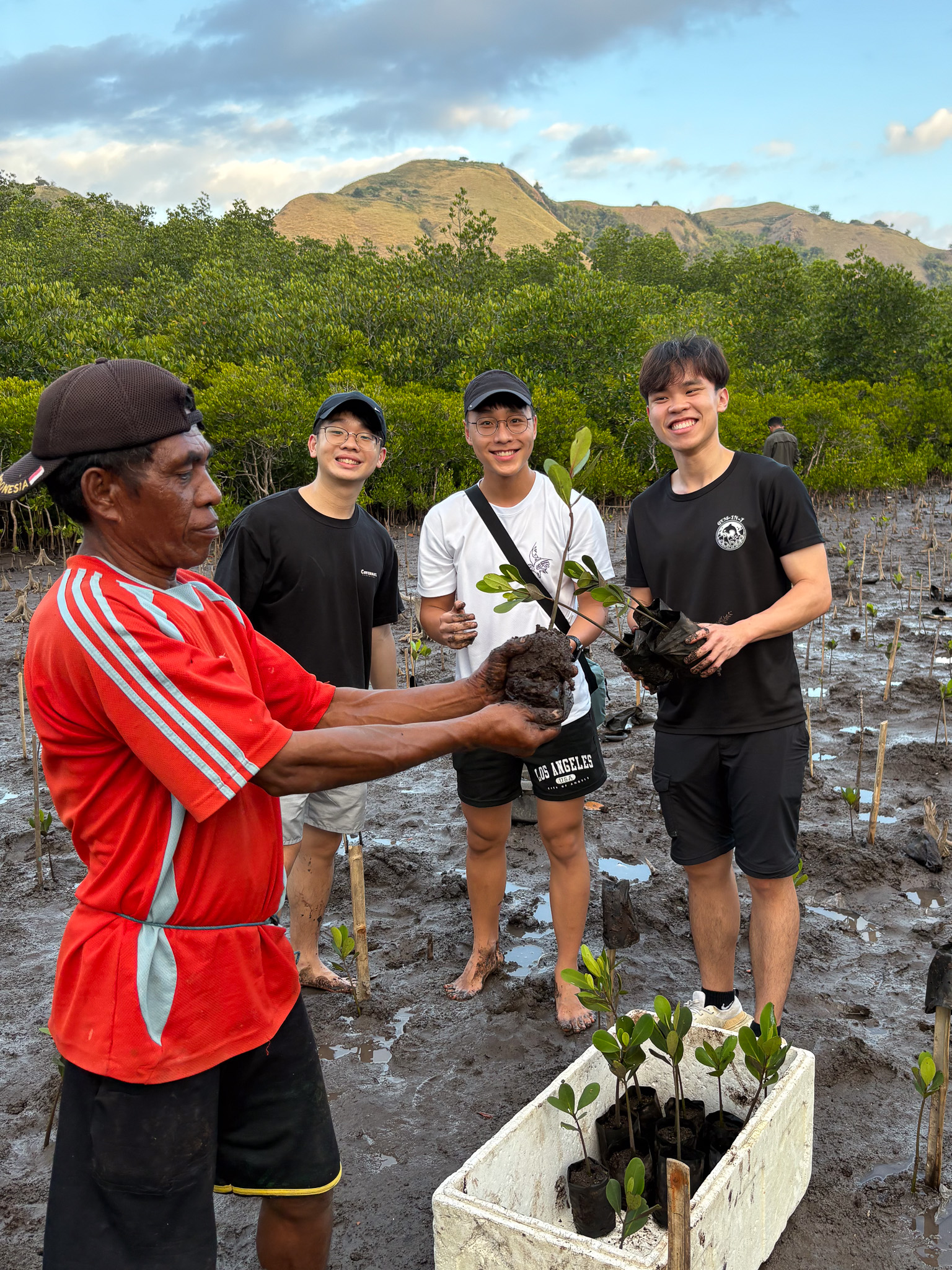
For the NUS group, this was our first attempt at planting mangrove trees. We were grateful for the villagers’ patience as they guide us along through the process while we sloshed about and slipped in the mud.
Planting could only be done at low tide when the muddy coastal area became accessible. Alongside local residents, we planted over 300 mangrove saplings. Thick mud covered our boots and hands, and we had to move carefully to avoid damaging young roots. The village elders told us that the saplings we planted would, perhaps 4-10 years later, grow into strong trees that will help protect both the land and the people.
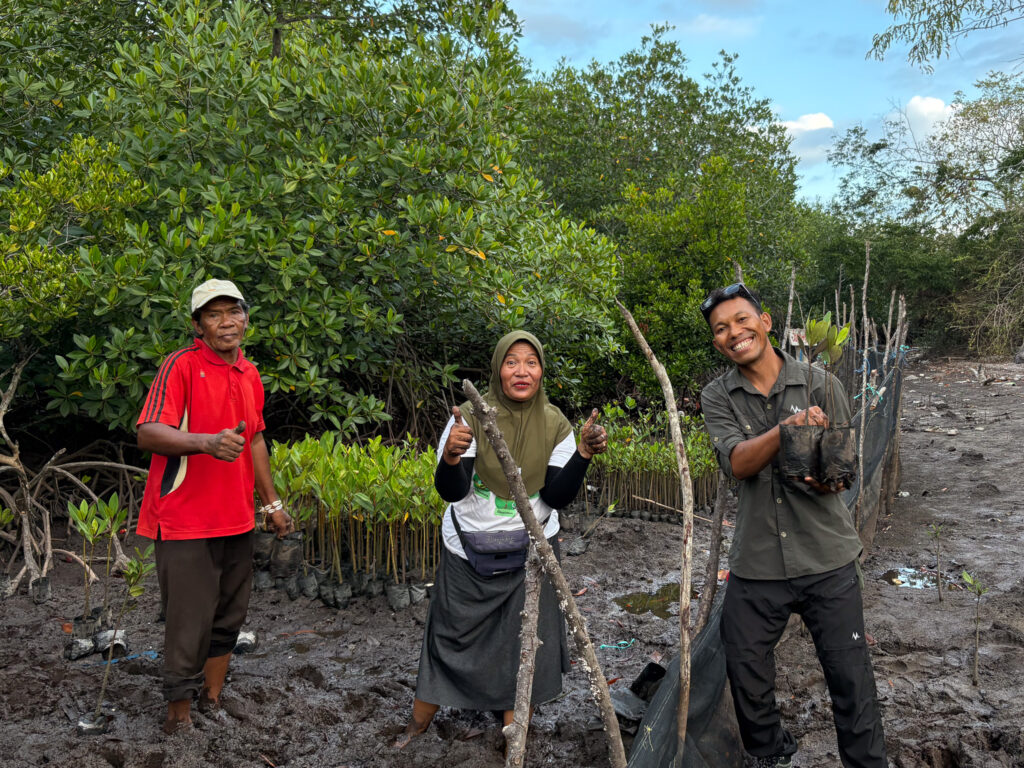
Madam Sarifa, one of the key community leaders who spearheads the mangrove rehabilitation project, told us, “Thank you for joining us to plant for the future generations. When the mangrove trees grow - fish, prawns and crabs will come to lay eggs. There will be more sea life. Our men will have safer days as they do not have to travel far out into the sea to catch fish”.
After the tree planting, we hiked past the local secondary school and we were ushered up a hill to see a glorious sunset. We were then divided into small groups to be housed and hosted by different families.
From the moment we arrived, we were met with warmth and hospitality. The villagers generously hosted us in their homes, offering great care and kindness despite having few material possessions. What stood out most was the strong sense of trust in the community. That night, before we went to bed, we noted that our host just used a brick to lean against the door as a way of keeping the door closed. Most homes did not have locks, reflecting the close relationships and shared responsibility among neighbours.
Our short stay allowed us to take part in everyday village routines. Bathing was done using a pail and scoop, with cold water drawn from a nearby well. While this was unfamiliar to many of us, it was refreshing and served as a reminder of the ways people live with limited but carefully managed resources.
Meals were prepared with locally sourced ingredients and shared in a communal setting. Although there were language differences, we found connection through shared experiences, laughter and food. The hospitality we received was sincere and deeply humbling.
Although our visit lasted only two days, it left a lasting impression. It allowed us to understand how sustainability is not only about conserving the environment but also about building strong communities.
The collaboration continues. Some of us noticed that the assembly area for the secondary school was plot of dry weather-beaten patch. Our course instructors had a discussion and announced a shared plan to plant some 20 trees – local woody and some mango trees at the school compound halfway up the hill. The village leaders happily committed to planting these trees at the start of the coming rainy season. They also plan to fence up the saplings so that goats and other animals will not eat them.
What we experienced in Warloka could not be taught in a lecture hall. It required muddy hands, open minds and a willingness to listen and learn. We returned to Singapore with a stronger appreciation for the challenges faced by coastal communities and the importance of supporting grassroots efforts.