

Alumni Spotlight: Yue Tong Receives NUS Outstanding Undergraduate Researcher Prize
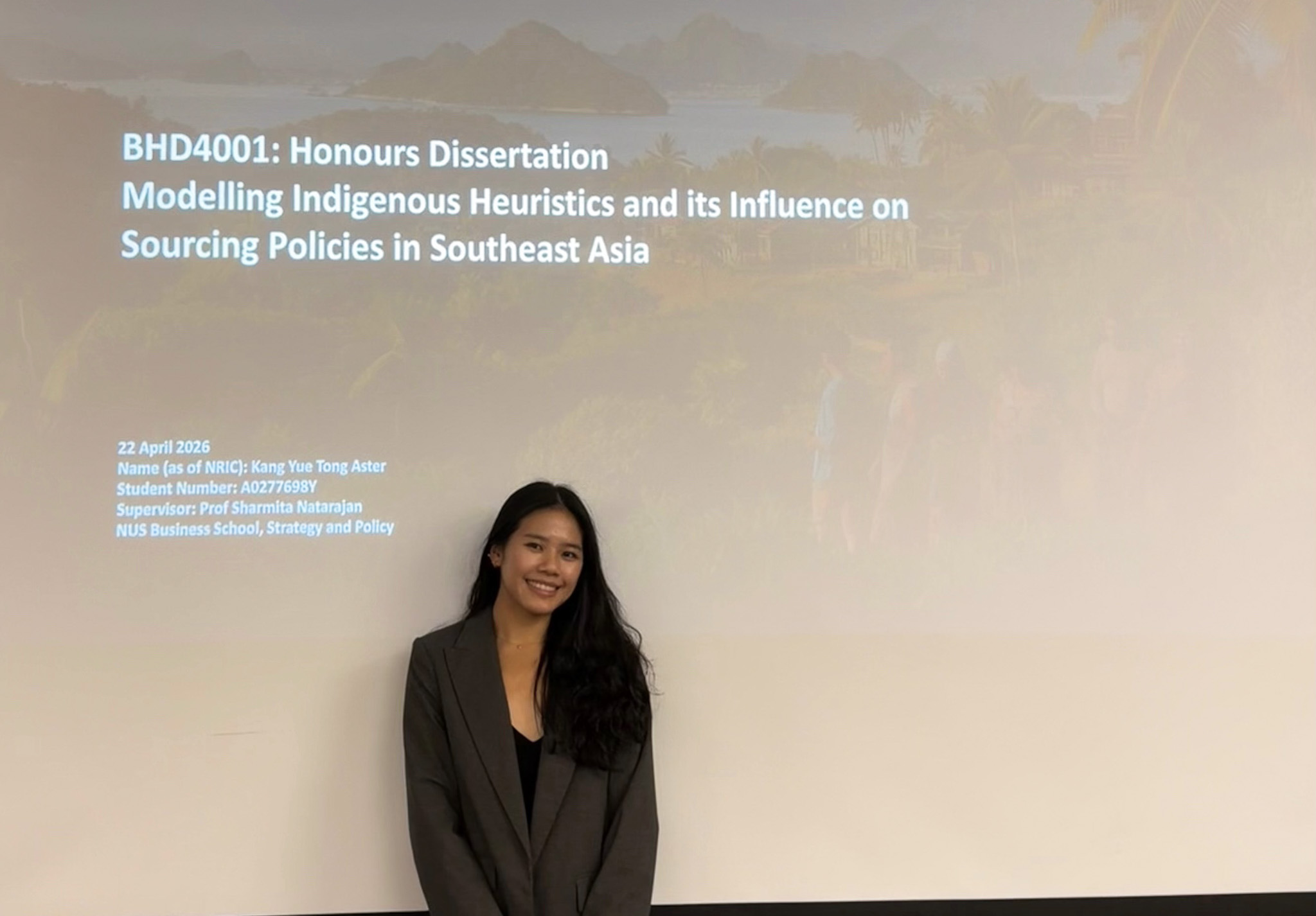
RC4 Alumni Yue Tong Receives NUS Outstanding Undergraduate Researcher Prize
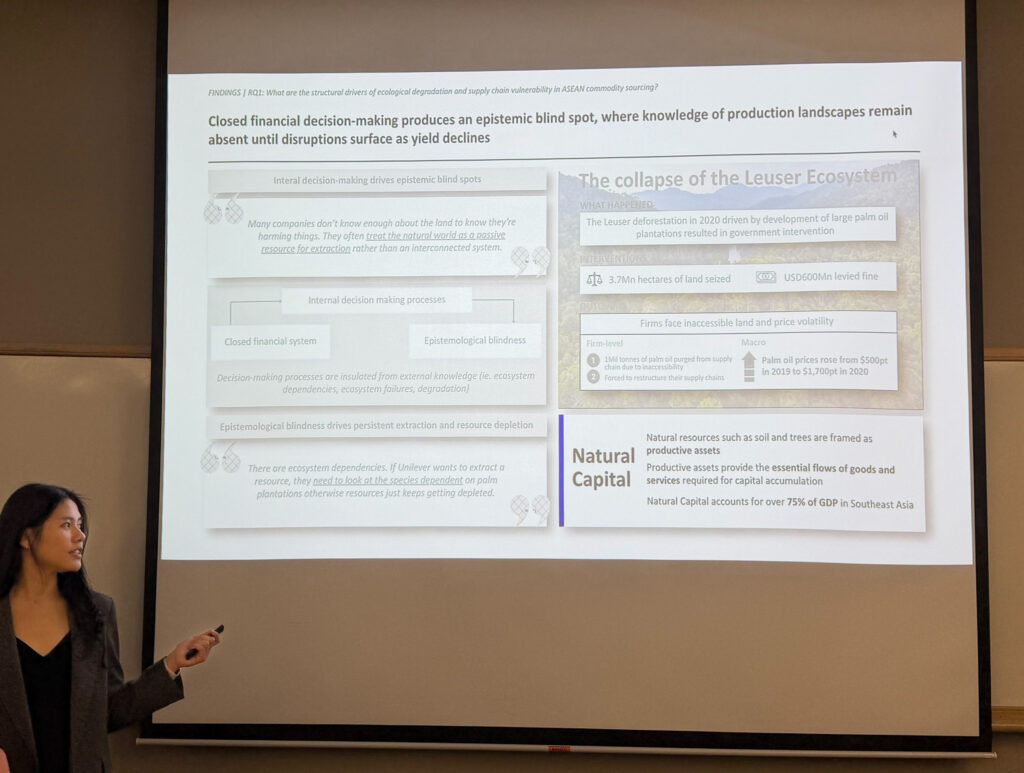
Residential College 4 Alumni, Kang Yue Tong (School of Business) has recently been recognised with the NUS Outstanding Undergraduate Researcher Prize for her honours dissertation, Systems Modelling Indigenous Heuristics and its Influence on Sourcing Policies in Southeast Asia.
Systems thinking played a central role in shaping her research, shifting her attention from how environmental degradation is produced to how it is consistently reproduced over time. “Through fieldwork and internships, I came to see how ecological and sourcing processes are deeply interconnected. When commodities are extracted, the entire ecosystem gets affected; however, the interconnectivity behind these systems often stay invisible and underexplored,” Yue Tong shared.
This observation led her to study sourcing through a systems perspective, one that examines how these interactions produce reinforcing feedback loops and unintended consequences over time, rather than treating environmental degradation as the result of individual decisions alone.
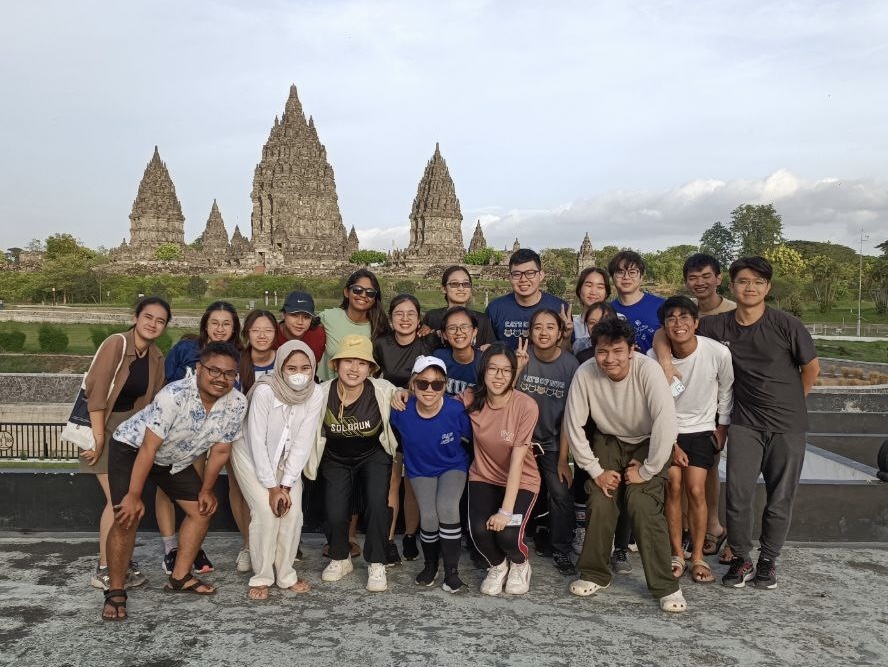
Yue Tong with fellow RC4 students in Indonesia for RC4’s SFI course, Water Governance in Asia from a Systems Worldview.
Her time at RC4 also played a formative role in shaping her perspective. During the RC4 Southeast Asia Friendship Initiative (SFI) course, Water Governance in Asia from a Systems Worldview, taught by Dr. Navarun Varma, she visited rural and indigenous communities in Indonesia. “Beyond the subject of water governance, I observed how these communities often hold deep place-based ecological knowledge,” she shared.
The fieldwork done during the SFI trip fundamentally changed the way she thought about environmental governance. It was her first opportunity to engage directly with local communities and apply systems modelling to a real-world sustainability challenge.
Outside of the classroom, Yue Tong also credits RC4’s culture of intellectual curiosity, which fostered an environment where interdisciplinary inquiry was genuinely encouraged. “Conversations with professors and peers from diverse faculties, many of whom had completed or were writing their own honours research, exposed me to different ways of thinking about environmental governance and challenged me to refine my own ideas,” she said. “These experiences broadened my perspective and gave me the confidence to move beyond conventional business frameworks for my dissertation.”
Yue Tong’s achievements reflect not only academic excellence, but also the value of approaching sustainability with openness, curiosity, and interdisciplinary depth.